Movies

New Releases • A-D • E-H • I-P • Q-Z • Articles • Festivals • Interviews • Dark Knight • Indiana Jones • John Wick • MCU
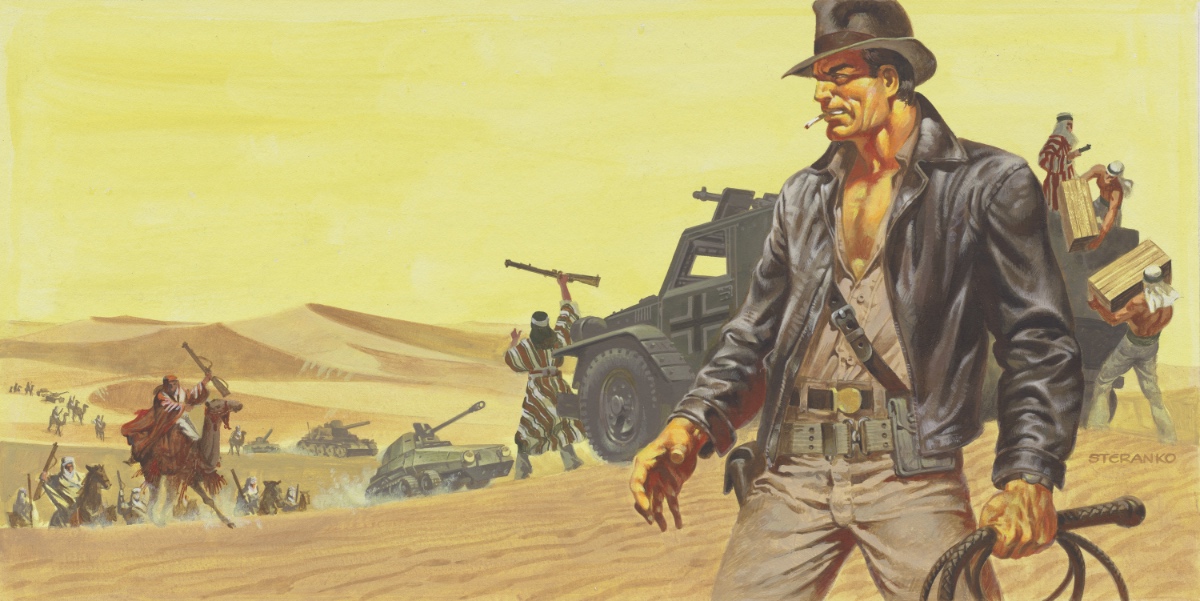 Famed comic book artist Jim Steranko’s phenomenal Raiders concept art evokes the pulps.
Art: Lucasfilm Ltd.
Indiana Jones and the Glorious World of Pulp Fiction
12 August 2026
There’s something I consider to be an obvious element to the Indiana Jones movies that – like an artifact lost to the ages – seems to be overlooked by way too many people and I finally found a minute to dust it off, to pull it into the present.
Let’s set the stage: It’s 1977. George Lucas and Steven Spielberg are on a beach, escaping from the pressures of Hollywood and the stress of a new movie release. Star Wars is heading toward theatres for the first time ever. They had no clue of what was about to unfold, of the movie’s historic impact that would change the entire movie industry.
At one point, while chit-chatting, Spielberg says he’d like to make a James Bond movie. Lucas says he has something better. It’s an archaeologist named Indiana Smith. (Funny side note: during interviews for Disclosure Day, Spielberg has quipped that if the Bond folks came to him now, he’d tell them they can’t afford him. Love it.)
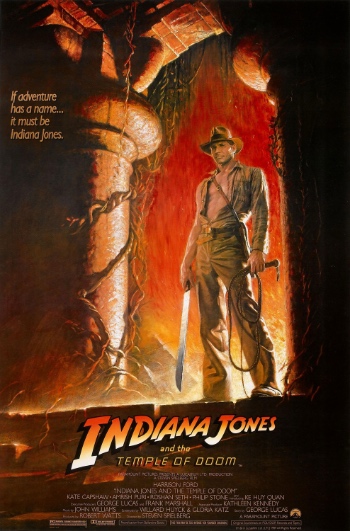
Pulp poster: “If adventure has a name... it must be Indiana Jones.”
Fast-forward to 1984. Indiana Jones and the Temple of Doom. Upon its release, it was widely criticized for its violence and dark tone, with the story centered on a cult of Kali worshipers led by a madman who could literally rip a person’s heart out and set it ablaze. (Couple Temple of Doom with Gremlins, released a few weeks later, and a whole new movie rating was created as a middle ground between PG and R for movies to rough or violent for PG, but not hardcore enough for R, with Red Dawn being the first movie to receive the PG-13 rating later that summer.) People also railed against Marion’s absence (cleverly, Doom takes place before Raiders.) They also lamented the swapping out of Nazis for Thugees and some proudly displayed their ignorance about the historically real gangs of robbers and killers from whom we got the word “thug.” Lucas and Spielberg apologized for their misstep. (I hate when artists apologize to appease lame criticism.) Part of the apology revolved around George being in a bad mood as he worked through a divorce from Marcia, his wife of 14 years.
But now, Temple of Doom is beloved.
Years later, I still hear this bit of dialogue in multi-channel spatial audio in the cinema of my mind: coming out of some speakers is George saying he has something better. On other channels are the scoffs of people off-put by Indy’s latest adventures. That’s accompanied by all the blank stares I see when I say I treasure all five Indy movies, including Crystal Skull (space aliens?!) and Dial of Destiny (time travel?!).
Yep. I say it time and again: those five movies are my cinematic comfort food.
I was a huge fan of Star Wars, until Kathleen Kennedy and J.J. Abrams betrayed the fan base (and, ultimately, George Lucas) by launching an absurd third trilogy to conclude the Skywalker Saga. They made a trilogy without a plan for a beginning, a middle and an end. That’s not the way to handle a series called the “Skywalker Saga” and it’s an about-face to how George had carefully mapped out the prior two trilogies. Kennedy and Abrams just wanted to – like some sort of Jurassic Park experiment – rebuild the DNA of the original trilogy, even packing enough hubris to dismiss George’s own outlines for the final three episodes, which by design featured a completely different tone and “feel” from the prior six. Disaster was inevitable.
That’s partly why I embrace the Indy movies so closely and dearly. There was never that betrayal. Instead, those movies, particularly Skull and Destiny, were bold. They had guts. (And I keep saying it: I wish George stuck with the so-pulpy-it’s-juicy title Indiana Jones and the Saucer Men from Mars instead of changing it to the spoiler-free Kingdom of the Crystal Skull. But that’s a marketing switch in keeping with George’s firm desire to keep the alien aspect as much of a surprise as possible.)
Sure, I also appreciate the creative tensions that were behind Crystal Skull, across and between Lucas, Spielberg and Harrison Ford. That’s part of the business, too. The fact they forged ahead and we got Crystal Skull is something for which I am grateful.
And, while I was practically heartbroken to hear Spielberg would not direct Dial of Destiny, I was relieved to find out James Mangold was taking his place. And I deeply appreciate who they went to for the screenplay: Jez Butterworth. Not a typical screenwriter, by any stretch. He’s a playwright. He wrote an incredible stage play called Jerusalem, which I saw on Broadway back in 2011. I even shot the breeze with Robert Englund as we waited to enter the theatre. We were both there to see a master actor, Mark Rylance, who starred in the show. (Rylance would go on to star in Spielberg’s Bridge of Spies and The BFG.)
I was thrilled with Destiny. I was anxious as all get-out beforehand. How bad was it going to be? I do my best to avoid early reactions and click bait for any movie I intend to review, but even I couldn’t escape some of the stink coming out of Cannes while doom-scrolling through Apple News.
Then the movie began and by the time Indy and Wombat were independently heading out to the antiques auction, I was hooked. Fully. I laughed. I cheered. I stomped my feet. I applauded. I even started to tear up. (Okay. I cried. A bit.)
I also teared up while providing my initial reaction to the PR folks. I had to explain those characters – Indy, Marion, Sallah – mean so much to me and I was so nervous about how the movie was going to turn out.
It was magic. It took guts to stick with that storyline, which also embraced Indy as an aging adventurer forced to adapt to the seemingly shrinking world around him (physically both in his New York apartment and his lack of adventuring as well as mentally, with his unresponsive, uninterested students). One of the concepts here is he was never able to benefit from all the fortune and glory because the treasures were never his to keep. Until the Antikythera is seen on his nightstand at the movie’s whip-crackingly solid conclusion.
My biggest disappointment became the world around me. By and large, the world didn’t “get” it. I’ve gotten bored by the derisive looks, even horrified gasps, when I declare my fondness for Skull and Destiny.
So, that takes me to the “big reveal,” as it were.
I always expected more from Indy Jones than deserts and Nazis. Right out of the gate, Temple of Doom, with its evil cult and pulpy title, satisfied all that I was hoping for from the series.
And, of course, Last Crusade is a full-blown classic in its own right. Genius casting there, with Sean Connery – the original James Bond – as Indy’s father.
But Crystal Skull and Dial of Destiny go full tilt in what I describe as the pulp fiction aspects of the series. Beings from another dimension? Time travel? Heck yeah! Sign me up!
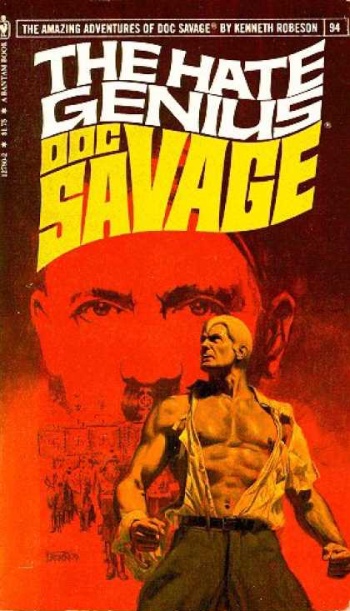
The Hate Genius, originally published as Violent Night in January 1945.
This is where the conversation typically goes something like this:
“Let’s talk about Doc Savage, from the pulp fiction days.”
“Doc Savage? Which character was he in Pulp Fiction? I don’t remember anybody by that name.”
“No. Not Pulp Fiction. I said ‘pulp fiction.’ The cheap dime novels of the 1920s, 1930s. Not the Quentin Tarantino thing.”
The massively popular publications, with titles like Weird Tales and Amazing Stories (which Spielberg produced as a 1980s TV series), hit their prime in the 1920s – 1940s, a source of entertainment before comic books were even a “thing.” Before Batman. Before Superman. Before James Bond.
There was Doc Savage.
Doc. Conan the Barbarian. Tarzan the Ape Man. The Shadow. Dick Tracy. Buck Rogers. (Flash Gordon was created as a competitor to Buck. After making THX-1138, Lucas tried to license Flash for a new movie. He didn’t like the terms set by King Features and decided it’d be best to create his own characters and worlds. And... voila... That trip to the beaches of Hawaii.)
Those characters are all part of that pulp period. The “pulp” is a reference to the cheap paper their stories were printed on. Rough edged pages. Wild stories of action, science-fiction, horror, mystery. Muscular men. Hot babes. Megalomaniacal villains. Bleeding-edge technology. Leaps of the imagination. Exotic locations.
That’s right. Anything goes.
The Savage books – more than 150 titles published over the course of some 15 years and written under the “house name” Kenneth Robeson – were massively popular. And this guy – Doc Savage – was a jack of all trades and master of all. He was a scientist, a yoga sensei, a fitness guru, a philanthropist. He lived in a Fortress of Solitude in the Arctic Circle. He used all sorts of gadgetry to confront his enemies and monsters and to enable his globetrotting adventures.
Gosh. That’s crazy. He’s ripping off Superman and Batman! (And Buckaroo Banzai!)
Nope.
Doc made his first appearance in March 1933.
Superman: April 1938.
Batman: March 1939.
(Banzai: August 1984.)
Huh.
So, really, Superman and Batman would – quite likely – not exist were it not for Doc. The Man of Bronze. At least not as the same characters pop culture has embraced for nearly 100 years. And, yeah, same goes for Marvel’s assembly of characters.
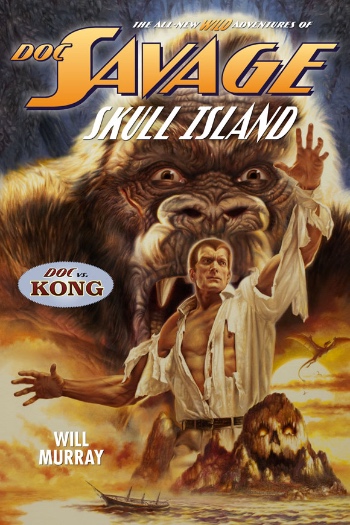
Skull Island, originally published in February 2013
with art by Joe DeVito.
So few people are aware of this. But that’s less of a surprise when considering people are becoming increasingly ignorant of most of world history.
All that said, I also consider Doc as a progenitor to my own favorite “doctor,” Henry Jones, Jr.
Doc Savage pops into my consciousness every once in a while. I was introduced to him even before Luke Skywalker.
And so it is Doc’s popped back on my radar again. I recently came across a Doc Savage story, published in 2013, by Will Murray. Doc Savage: Skull Island. What’s this? Huh. It’s an awesome crossover storyline that follows Doc in the aftermath of King Kong’s demise at the Empire State Building. His enormous corpse, after all, was right outside Doc’s office when he showed up for work one morning. (The book is dedicated to Merian C. Cooper and based on a concept by Joe DeVito.)
Now that’s what I’m talkin’ about. And that’s also become the catalyst to finally get these thoughts written down on cyber paper.
It’s all about the imagination.
It’s not about the science of time travel or the questionable existence of space creatures.
It’s about ideas. It’s about taking those ideas and going to wild places.
And it’s about – more than anything else – feeling something. Feeling a connection with the characters and the extreme situations. Feeling emotions. And daydreaming about the possibilities for what comes next.
The beauty of the Indy series is it also follows a logical, real-world timeline while mixing in the supernatural and the fantastical. It’s always been “pure pulp.” With Crystal Skull set in 1955, it’s when the Red Scare was real and stories of UFOs and Area 51 were starting to make waves. It’s also when a guy could lose his job simply by having mere allegations of keeping the wrong company thrown at him, as happened to Indy with his involuntary “recruitment” by the Russians.
Dial of Destiny, set in 1969, in my view, was a brilliant melding of fantasy and history. What is archaeology if not a form of time travel? And it’s Indy at his “pulpiest” as he actually goes back in time to a period of personal interest to him.
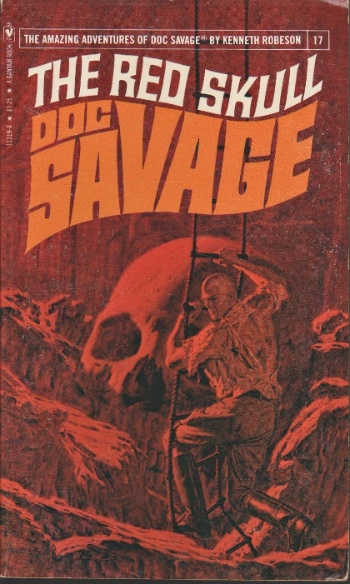
The Red Skull, originally published in August 1933.
It’s a leap of faith.
It’s so unfortunate so many other people were unable to take that leap with me and George and Jez and James.
And, based on some conversations, I think part of the problem is some people got hung up on the Raiders “experiment.” Reeling after 1941 didn’t meet the public’s expectations as Spielberg’s follow-up to the enormous successes of Jaws and Close Encounters, Spielberg and Lucas approached Raiders as a sort of filmmaking experiment to recharge themselves. Low budget. Short production schedule. Heavy emphasis on on-set stuntwork and practical effects, but still with some use of fancy post-production special effects (including the Ark’s spirits and matte paintings). Raiders was, from a certain point of view, the 1981 level-set Christopher Nolan’s The Odyssey is today. Granted, Nolan’s taken the concept to a breathtaking scale with equally breathtaking results. Lucas and Spielberg also used Raiders as an experiment to see how much information people could process quickly. That aspect seems quaint in comparison to the over-the-top, breakneck pacing of today’s action movies. Some will argue Crystal Skull and Dial of Destiny broke that Raiders production ethos and even consider the effects work as shoddy (particularly Destiny, the first Indy movie made under Diseny ownership, which was eating up digital effects resources across the industry to feed its intensive Marvel production schedule.) I disagree. I look at that as a “too smart for school“ argument with a limited shelf life. Raiders was merely a starting point. There were plenty of special effects in Raiders and there was an increasing use of SPFX tricks in each of the subsequent episodes.
All of this still leaves out the fun to be had in seeing young Indiana Jones meet all sorts of major historical figures in the The Young Indiana Jones Chronicles, a 1990s TV series that made history fun and accessible to the masses.
Every now and then news pops up of a potential new Doc Savage movie (one released in 1975 was a big dud). A name consistently associated with a Doc Savage revival gets me all the more excited: Shane Black. He shares writing credit on the original Lethal Weapon with Jeffrey Boam, the scribe behind Last Crusade. Black also wrote and directed Iron Man 3 and The Nice Guys.
In an October 2025 Hollywood Reporter interview, Black provided a disappointing update about Doc’s movie prospects:
“I’ve always loved Doc Savage. It’s based on ’30s pulp, and he was the OG superhero. His name was Clark [Savage Jr.], and he was literally described as a ‘super man.’ So the first Doc Savage [in 1933] was before Clark Kent/Superman [in 1938]. He was the inspiration behind a generation of comic books and pulps and wonderful shit. So I would love, at some point, to revisit that. The problem is that the IP is not a household name. It’s much easier to fund something at that level of expense if it has Batman or Superman attached, as opposed to something that is going to be just as expensive and is less of a household name.
“I don’t know. The problem is that it has to be someone that you can approach a studio with and say, ‘It’s going to be $150 million. Minimum.’ Doc Savage is about an entire world of adventure, and it’s a ‘30s period piece. I wouldn’t want to modernize it. So, yeah, I would look into finding a way to do that, but I still don’t have an actor in mind. It would have to be someone compelling enough to get the studio to loosen up those purse strings for us.”
The Fantastic Art of James Bama
James Bama started creating cover art for Bantam’s reprints of Doc Savage’s original adventures back in the 1960s. Across the board, they are superb pieces of art and pulp culture. All of the Savage covers on this page are by Bama, with the exception of the Skull Island art.
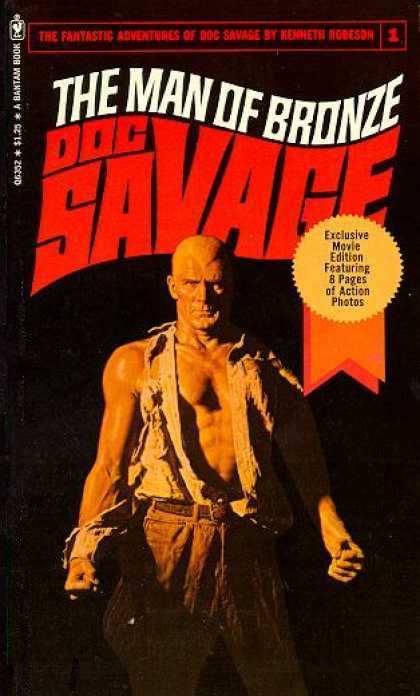
The Man of Bronze
originally published
March 1933
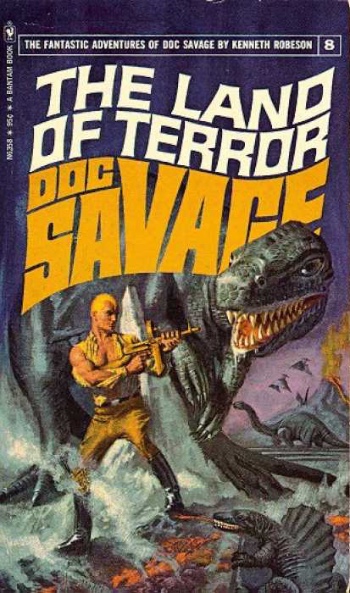
The Land of Terror
originally published
April 1933
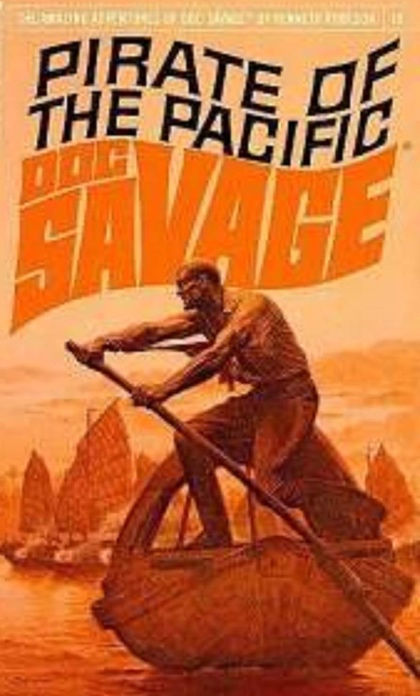
Pirate of the Pacific
originally published
July 1933
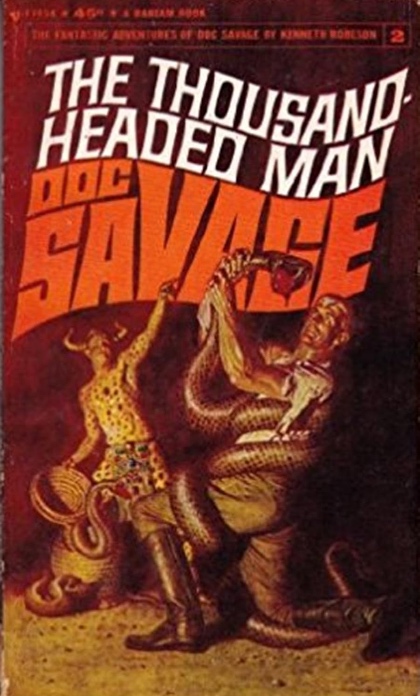
The Thousand-Headed Man
originally published
July 1934
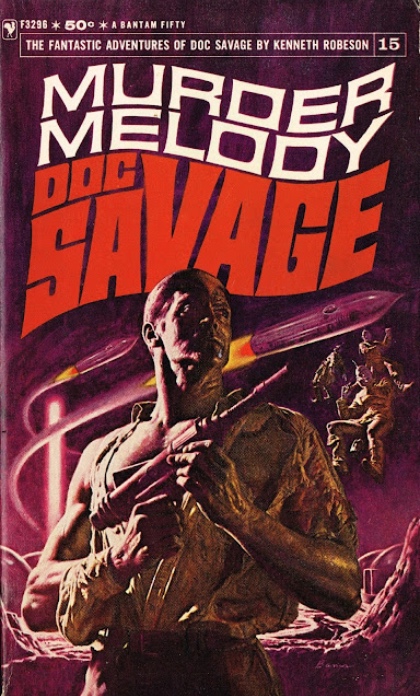
Murder Melody
originally published
November 1935
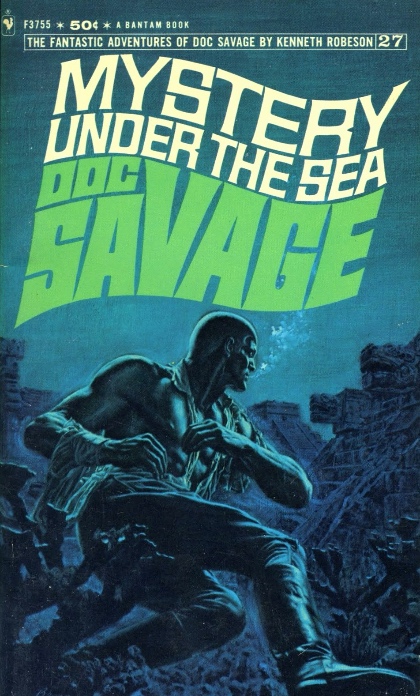
Mystery Under the Sea
originally published
February 1936
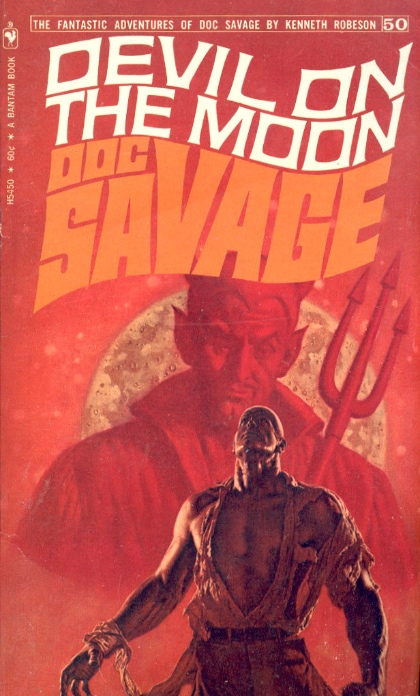
Devil on the Moon
originally published
March 1938
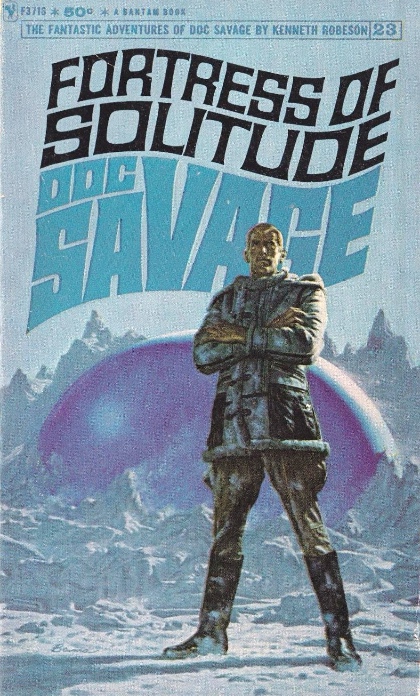
Fortress of Solitude
originally published
October 1938

Tour the Mattsonian Archives and explore the entire Indiana Jones movie series and The Young Indiana Jones Chronicles.
Contact 
Write Matt
Visit the Speakers Corner
Subscribe to Mattopia Times
Support 
Help Matt live like a rock star. Support MATTAID.
It's a crazy world and it's only getting crazier. Support human rights.
Search 
The Mattsonian Archives house more than 1,800 pages and 1.6 million words. Start digging.